HerTeleMeds
← Back
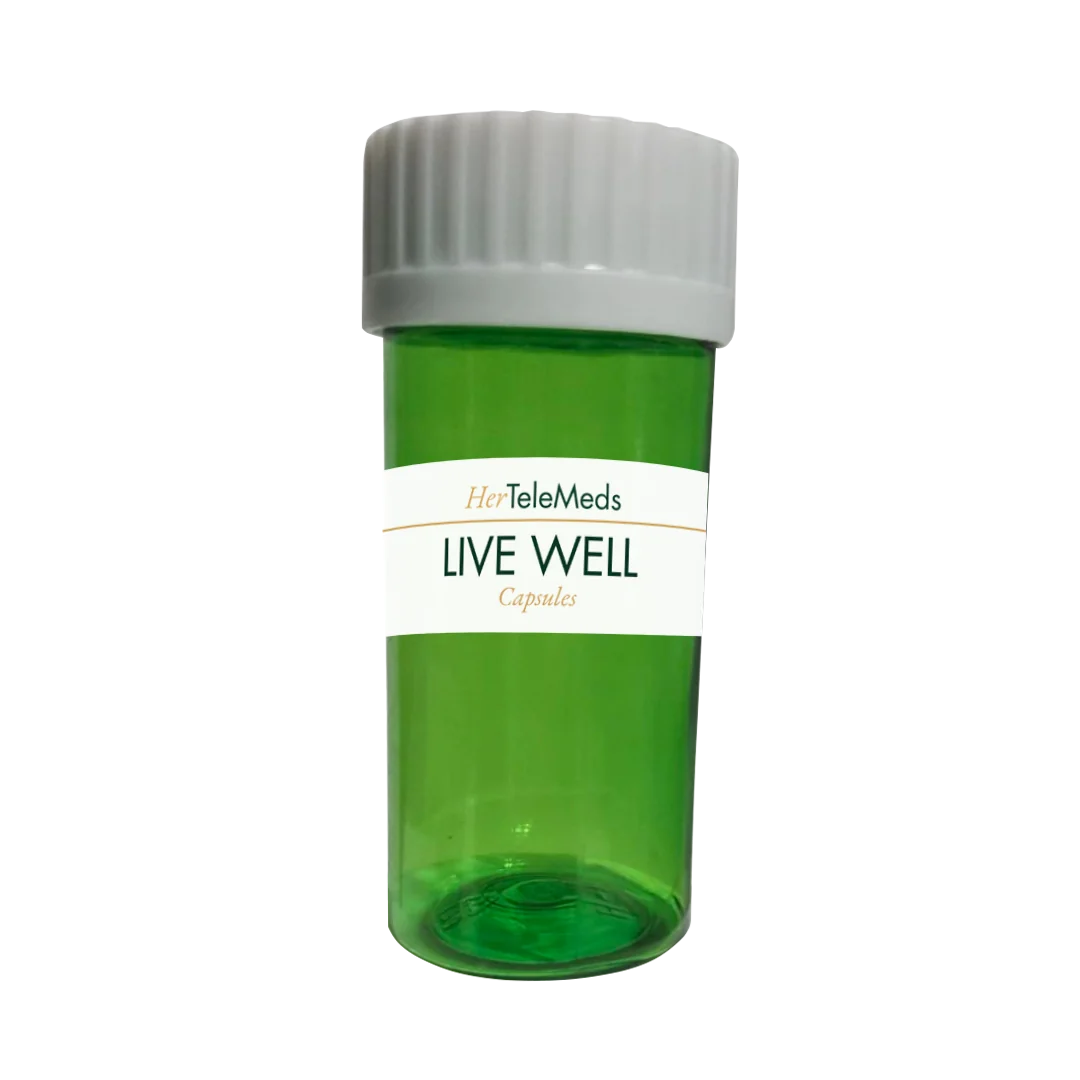
Live Well Capsules jar
RxPrescription Included

Live Well Capsules

The most studied longevity compound in biology — prescribed for women who want more healthy years, not just more years.

Rapamycin has extended healthy lifespan in every animal model it has been tested in. It is the only intervention to do so consistently, across species, even when started late in life. Live Well Capsules bring low-dose, once-weekly rapamycin to women who are approaching their health proactively — not waiting for a diagnosis, but investing in the cellular processes that determine how well the years ahead feel.

Size

4 capsules
Ships every 30 days
$129.00 per shipment
🔒 HIPAA Secure
🧪 Compounded in USA
📋 No Charge until approved

WHAT TO EXPECT

Results, stage by stage.

Rapamycin for longevity is not a supplement with a results timeline in the traditional sense. You are not treating a symptom. You are intervening in the biology of cellular aging — a process that operates over years and decades, not weeks. That said, patients starting rapamycin often report some early shifts and it helps to know what is and isn't on the table.

WEEKS 1–4

Starting at 3mg

Your protocol begins with 3mg (one tablet), taken once per week. This starting dose lets your body and your clinician establish a baseline — confirming tolerability before increasing. Some patients notice early GI sensitivity in this phase, typically mild nausea or loose stools, particularly after the first dose or two. This is common and usually resolves on its own.

WEEKS 5–8

Increasing to 6mg

After four weeks at 3mg, your dose increases to 6mg (two tablets), still taken once per week. This is the titration step — moving toward the dose your clinician has identified as the maintenance target. If side effects from the 3mg phase were significant, talk to your clinician before increasing; titration pace can be adjusted.

WEEK 9 ONWARD

Maintenance at 6mg

Once you've reached 6mg weekly, this becomes your ongoing maintenance dose — the level you'll stay on for the duration of your protocol, pending your lab results and your clinician's guidance. At the cellular level, mTOR inhibition is triggering autophagy — the body's process of clearing damaged proteins and cellular debris that accumulates with age. This is not something you'll feel directly, but it is the mechanism underlying rapamycin's longevity effects in preclinical research. Labs at this stage confirm your lipid levels, blood counts, and metabolic markers remain stable at the higher dose.

The PEARL trial — the most rigorous human study of low-dose rapamycin to date — followed healthy adults for 48 weeks. Results showed an acceptable safety profile and secondary signals of benefit, particularly in women, including trends in lean muscle preservation and reduced chronic pain. No long-term human trial has yet demonstrated lifespan extension. The evidence base is strong in animal models and early in humans. Patients who come to rapamycin for longevity are not chasing a metric — they are investing in the cellular infrastructure that determines how they feel at 60, 70, and beyond. Your clinician will discuss where the science stands honestly.

Live Well Capsules jar

ABOUT THE TREATMENT

What is Live Well Capsules?

How it works

Every cell in your body runs on a signaling protein called mTOR — mechanistic target of rapamycin. mTOR is a master regulator: when nutrients are plentiful and conditions are favorable, it tells cells to grow, divide, and produce. This is essential during development and recovery. But chronically elevated mTOR — which is what happens with age and with the constant caloric abundance of modern life — drives cellular aging. It pushes cells toward growth and suppresses the maintenance work that keeps them healthy: autophagy, the cellular cleanup process that clears damaged proteins and dysfunctional components before they accumulate.

Rapamycin is the most specific and well-studied mTOR inhibitor known to science. At low, intermittent doses, it temporarily dials down mTOR signaling — not to suppress it wholesale, but to create a window in which the cell's maintenance systems come back online. Autophagy activates. Cellular debris gets cleared. Inflammatory signaling decreases. The cell, briefly, prioritizes repair over growth.

This intermittent pattern is what separates longevity dosing from transplant dosing. Continuous high-dose rapamycin — the kind used in organ transplant medicine — suppresses mTOR around the clock, which carries real immunosuppressive risks. Weekly low-dose rapamycin creates a pulse: mTOR inhibition for a brief window, then recovery before the next dose. The cellular benefits are captured; the immunosuppression is largely avoided.

What the evidence shows

Rapamycin is the only intervention to have consistently extended lifespan across genetically diverse mouse models in the NIA's Interventions Testing Program — including when started late in life, the equivalent of giving it to a 60-year-old human. Similar effects have been seen in dogs and marmosets.

In humans, the evidence is earlier-stage but accumulating. The PEARL trial (2025) — 48 weeks, randomized, placebo-controlled — found weekly low-dose rapamycin safe in healthy adults with secondary signals of benefit. The VIBRANT trial at Columbia University is studying whether weekly rapamycin can slow ovarian aging in women aged 38–45; early results reported a roughly 20% reduction in the rate of ovarian aging. Human lifespan data does not yet exist. Your clinician will discuss the evidence base with you directly.

Who this is for

Live Well Capsules are for women who are thinking ahead. You are not treating a condition — you are investing in the biological processes that govern how well you age. Jasmine, at 38, may be particularly relevant to the emerging ovarian aging data. Renée, at 52, is in the window where age-related biological changes are already measurable and where the case for early intervention is growing. Both are appropriate candidates for a conversation about rapamycin with their HerTeleMeds clinician.

This is an off-label use of rapamycin. It is not FDA-approved for longevity. The science is serious, the interest is growing, and the clinical oversight required to do this well is exactly what HerTeleMeds provides.

Active ingredients
Rapamycin (Sirolimus) 3mg tablets — dosed as 1 tablet (3mg) weekly for the first 4 weeks, then 2 tablets (6mg) weekly thereafter as the maintenance dose.
Dispense
4 capsules

HOW TO USE

Four steps, every day

  1. STEP 01

    Weeks 1–4: Start at 3mg

    Take one 3mg tablet, once per week, for your first four weeks. This starting dose allows your body to adjust and gives your clinician a baseline read on tolerability.

  2. STEP 02

    Weeks 5–8: Increase to 6mg

    After four weeks at 3mg, increase to two 3mg tablets (6mg total), taken once per week, for the next four weeks. This is a clinician-directed titration step — do not increase early or stay on 3mg longer than prescribed without checking in.

  3. STEP 03

    Week 9 and beyond: Maintenance at 6mg

    Once titration is complete, continue taking two 3mg tablets (6mg total) once per week as your ongoing maintenance dose, for as long as your clinician recommends.

  4. STEP 04

    Take with food

    Rapamycin absorption is meaningfully increased when taken with a high-fat meal. Take your weekly dose with a meal that contains healthy fats — avocado, olive oil, eggs, nuts. Consistent administration with food also improves tolerability.

  5. STEP 05

    Take on the same day each week

    Choose a day and stick to it through both the titration phase and maintenance. Consistency in timing supports stable pharmacokinetics. Many patients take their dose on Sunday or Monday.

  6. STEP 06

    Do not double up if you miss a dose

    If you miss your weekly dose, take it as soon as you remember — but skip it if your next scheduled dose is within a day or two. Never take two doses to make up for a missed one.

  7. STEP 07

    Attend your scheduled labs

    Rapamycin requires periodic monitoring: CBC, lipid panel, kidney and liver function, and glucose — especially important around the dose increase at week 5. Your HerTeleMeds clinician will advise on frequency.

Disclose rapamycin use to all healthcare providers, especially before any surgical procedure. Do not share this medication with others.

The most consistent longevity finding in biology. Rapamycin has extended healthy lifespan in every diverse animal model tested in the NIA's Interventions Testing Program. No other single intervention has replicated this result as consistently.

Weekly, not daily. Low-dose, intermittent dosing is what separates longevity use from transplant medicine. One capsule per week. The weekly gap is built into the science — it's what preserves immune function while the cellular maintenance benefits accumulate.

Clinician-prescribed and monitored. This is not a supplement. Rapamycin is a prescription medication used off-label for longevity, with required lab monitoring and clinical oversight. HerTeleMeds provides both.

Emerging data specific to women. The VIBRANT trial at Columbia University found early evidence that weekly rapamycin may slow ovarian aging in women aged 38–45. The PEARL trial found women in particular showed secondary signals of benefit after 48 weeks. The longevity research is catching up to women's biology.

How HerTeleMeds Works

How HerTeleMeds Works

  1. 01

    Tell us about you

    Answer a few questions about your skin and medical history.

  2. 02

    Get evaluated

    A U.S.-licensed provider reviews your information within 24 hours.

  3. 03

    Treatment ships

    If prescribed, your compounded formula is made fresh and arrives discreetly — often within 2–3 days.

  4. 04

    Apply daily

    One application a day. Results build gradually with consistent use.

Product details

The fine print

Active
Rapamycin (Sirolimus) 3mg tablets — mTOR inhibitor, off-label use for longevity/healthspan support. Dosed as 1 tablet (3mg) weekly for the first 4 weeks, then 2 tablets (6mg) weekly thereafter as the maintenance dose.
Inactive
Methylcellulose, Vegetable Capsule
Dispense
4 capsules

FAQ

Questions, answered.

What is rapamycin and why are people using it for longevity?

+

Rapamycin is a prescription medication originally developed to prevent organ rejection after transplants. It works by inhibiting mTOR, a cellular signaling protein that, when chronically active, drives biological aging. At low, weekly doses, rapamycin briefly pauses mTOR's growth signals and allows the cell's repair and cleanup systems to activate. It is the only intervention to have consistently extended healthy lifespan in diverse animal models — which is why a growing number of clinicians and researchers are exploring its use in humans for longevity and healthspan.

Is rapamycin FDA-approved for longevity?

+

No. Rapamycin is FDA-approved for organ transplant rejection prevention. Its use for longevity, metabolic health, or healthspan support is off-label. Live Well Capsules are a compounded formulation, not FDA-reviewed. HerTeleMeds prescribes rapamycin for longevity purposes under clinical supervision, with required lab monitoring. This is a decision made in partnership with your clinician — not a supplement.

What does 'once weekly' dosing mean, and why isn't it taken daily?

+

The weekly interval is the science, not a convenience. Continuous daily rapamycin — the kind used in transplant medicine — suppresses mTOR around the clock, which causes real immunosuppression and metabolic side effects. Weekly dosing creates a pulse: mTOR is briefly inhibited, triggering cellular cleanup and repair, and then recovers before the next dose. This captures the longevity mechanism while largely preserving immune function. The intermittent pattern is supported by animal models and the PEARL trial in humans.

Why does the dose increase from 3mg to 6mg?

+

Your protocol starts at a lower dose — 3mg once weekly for the first four weeks — so your clinician can confirm how your body responds before increasing. After that initial period, the dose increases to 6mg once weekly, which becomes your ongoing maintenance dose. This step-up approach is a standard, cautious way to start a new medication: establish tolerability first, then move to the dose associated with the protocol's intended benefits.

What is mTOR and why does it matter for aging?

+

mTOR (mechanistic target of rapamycin) is a master regulator of cell growth and metabolism. When conditions are favorable — nutrients available, no stress signals — mTOR tells cells to grow and divide. This is useful in youth and during recovery. The problem with aging is that mTOR stays chronically active even when the body would benefit from maintenance and repair. Chronically elevated mTOR suppresses autophagy, the cellular housekeeping process that clears damaged proteins and dysfunctional components. Rapamycin temporarily dials mTOR down, allowing that maintenance work to resume.

Is there human evidence that rapamycin extends lifespan?

+

Not yet — no clinical trial has demonstrated lifespan extension in healthy humans. The evidence in animal models is among the most replicated findings in aging biology. In humans, the PEARL trial (2025) demonstrated that weekly low-dose rapamycin is safe over 48 weeks in healthy adults, with secondary signals of benefit. The VIBRANT trial at Columbia is studying whether it can slow ovarian aging in women. The science is serious and accumulating. It is not yet definitive. Your HerTeleMeds clinician will discuss the evidence honestly with you before prescribing.

Is rapamycin relevant to me if I'm in perimenopause?

+

Possibly, and this is one of the more exciting areas of emerging research. The ovaries are among the earliest-aging organs in the body, and ovarian aging drives hormonal changes throughout the system. The VIBRANT trial found early evidence that weekly rapamycin may slow the rate of ovarian aging in women aged 38–45. For Jasmine at 38, this context is directly relevant. For Renée at 52, the broader healthspan benefits — immune function, cellular repair, metabolic flexibility — are the primary clinical rationale. Your clinician will discuss what the evidence supports for your specific stage.

What are the risks I should know about?

+

At the doses prescribed for longevity, the most common side effects are mouth sores, mild GI symptoms (nausea, diarrhea), elevated cholesterol, and increased susceptibility to minor infections. More serious effects — significant immunosuppression, severe lipid changes, wound healing problems — are more associated with continuous higher-dose use, not weekly low-dose protocols. Regular lab monitoring is required and is how your clinician catches any changes early. Do not use rapamycin if you have an active infection, are pregnant, are healing from surgery, or have uncontrolled hyperlipidemia.

How does this compare to other longevity supplements like NMN, resveratrol, or metformin?

+

Rapamycin has a stronger and more consistent preclinical evidence base than any supplement currently marketed for longevity. NMN and resveratrol have generated significant interest but inconsistent human data. Metformin is another prescription option with a growing longevity evidence base (the TAME trial is ongoing). What sets rapamycin apart is the replication and consistency of the lifespan extension data across animal models, and the mechanistic specificity of mTOR inhibition. It is also the only option here that requires a prescription and clinical monitoring — which is part of what makes it a different category of intervention.

You're not waiting to get sick. You're acting before you have to.

The women who tend to live well longer are not the ones who treated problems after they arrived. They're the ones who understood the biology early enough to work with it. Live Well Capsules are for that woman — the one who has done the reading, wants the clinical partnership, and is ready to act on what the science supports.

Start your consultation

Ships within 2–3 business days after clinician approval. Lab monitoring included in your care plan. Prescription included with your visit. Cancel or pause anytime.