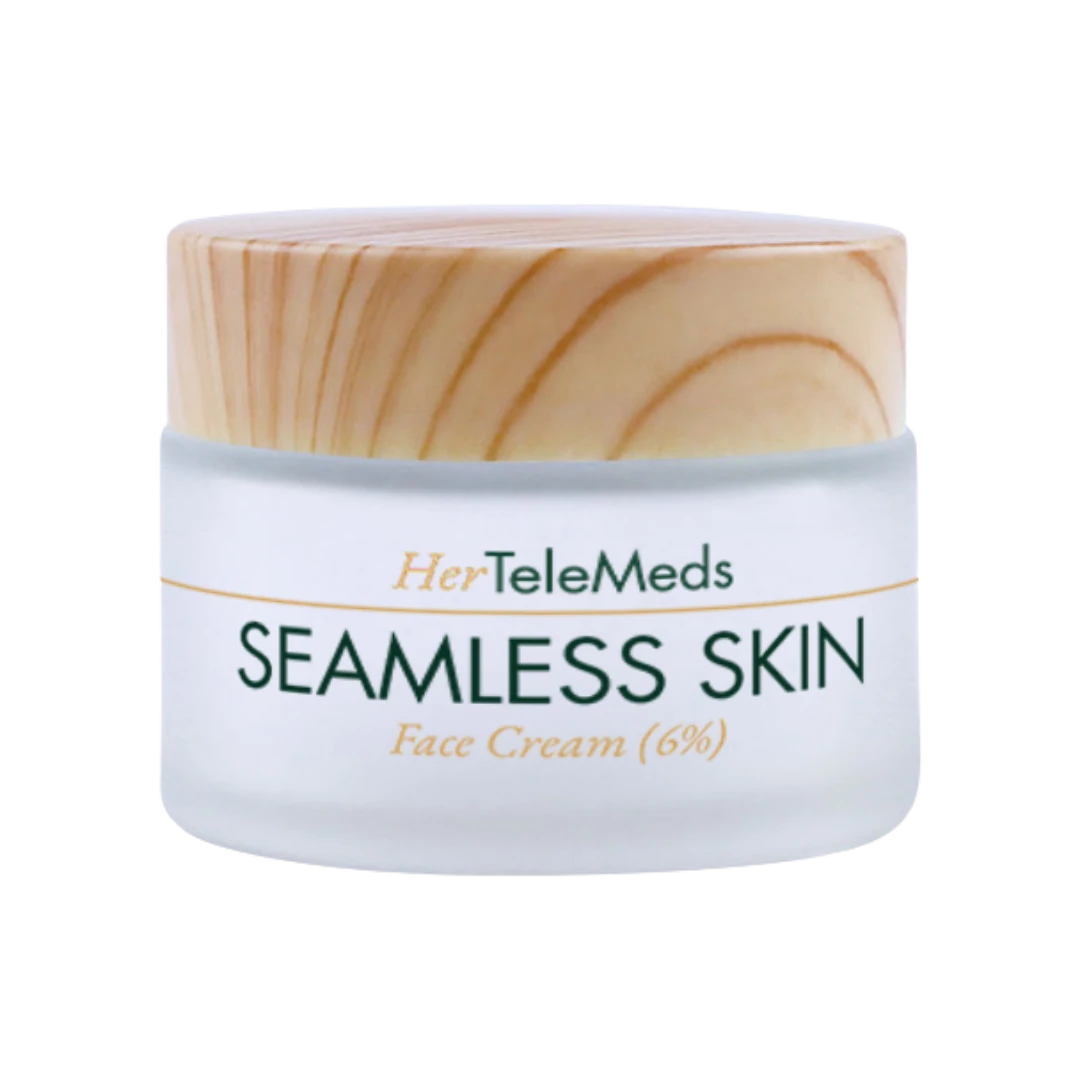
What causes post-inflammatory hyperpigmentation, and why does it affect some people more than others?
+
PIH happens when melanocytes — the cells that produce skin pigment — respond to inflammation by releasing excess melanin into the surrounding skin. In melanin-rich skin, this response is naturally more pronounced. Women with deeper skin tones are disproportionately affected by PIH from shaving, ingrown hairs, acne, friction, and any other repeated skin irritation. It’s a biological response, not a skincare failure.
Who is Seamless Skin Face Cream most relevant for?
+
Women dealing with dark marks from shaving, plucking, ingrown hairs, razor bumps (pseudofolliculitis), acne scars, or PCOS-related hair removal on the face, underarms, bikini area, inner thighs, abdomen, or back. It’s also used for PIH from surgical scarring, friction-related darkening, and sun-related discoloration on the body.
How does hydroquinone compare to kojic acid or azelaic acid?
+
Kojic acid and azelaic acid are both effective, gentler alternatives to hydroquinone — they work on a similar mechanism (tyrosinase inhibition) but at a lower clinical intensity. For mild to moderate PIH in patients with sensitive skin, they’re a reasonable starting point. For more established or deeper pigmentation, prescription-strength hydroquinone typically produces faster and more measurable results. If you’ve used kojic or azelaic acid without sufficient improvement, or if your PIH is significant, Seamless Skin may be the more appropriate next step.
How does this compare to the Tender Clear Cream (TXA 6%)?
+
Both products treat hyperpigmentation, but through different mechanisms and for different patient profiles. Tender Clear Cream uses tranexamic acid — a gentler option with no required treatment breaks, lower risk of irritation, and suitable for longer-term use. Seamless Skin uses hydroquinone, which acts faster for many patients and may be more effective on deeper, more established PIH — but requires a prescribed treatment cycle and closer monitoring. Your HerTeleMeds clinician will help determine which formulation is right for your skin history and tolerance.
Why is 6% hydroquinone appropriate rather than a higher concentration?
+
Higher concentration does not always mean more effective — it often means more risk of irritation and side effects. The 6% formulation is designed for patients who need prescription-level treatment but whose skin, skin tone, or sensitivity profile makes a higher dose less appropriate. If you’ve experienced redness, dryness, or flaking with other treatments, or if your clinician identifies sensitivity risk factors during your consultation, 6% is the clinically sound starting point.
How long can I use this safely?
+
You shouldn’t use hydroquinone for more than five months at a time. If you see improvement, use the product for up to four months, then begin to taper off. If you want to resume the product after a break, wait two to three months before starting again. Your HerTeleMeds clinician will monitor your progress throughout the cycle and advise on next steps — including whether a non-hydroquinone maintenance option like Tender Clear Cream is appropriate during your break.
Does this product change my natural skin tone?
+
No. Hydroquinone works by reducing excess melanin in areas of active hyperpigmentation — it targets the pigment produced in response to inflammation, not your natural baseline tone. The goal is a more consistent, even-looking version of your own skin. Areas of normal pigmentation are not affected by targeted application.
Do I need to use SPF while using this?
+
Yes — always. Sun exposure is the primary driver of new pigment formation, and unprotected sun exposure while using hydroquinone will work directly against your results. SPF 30 or higher every morning is non-negotiable.