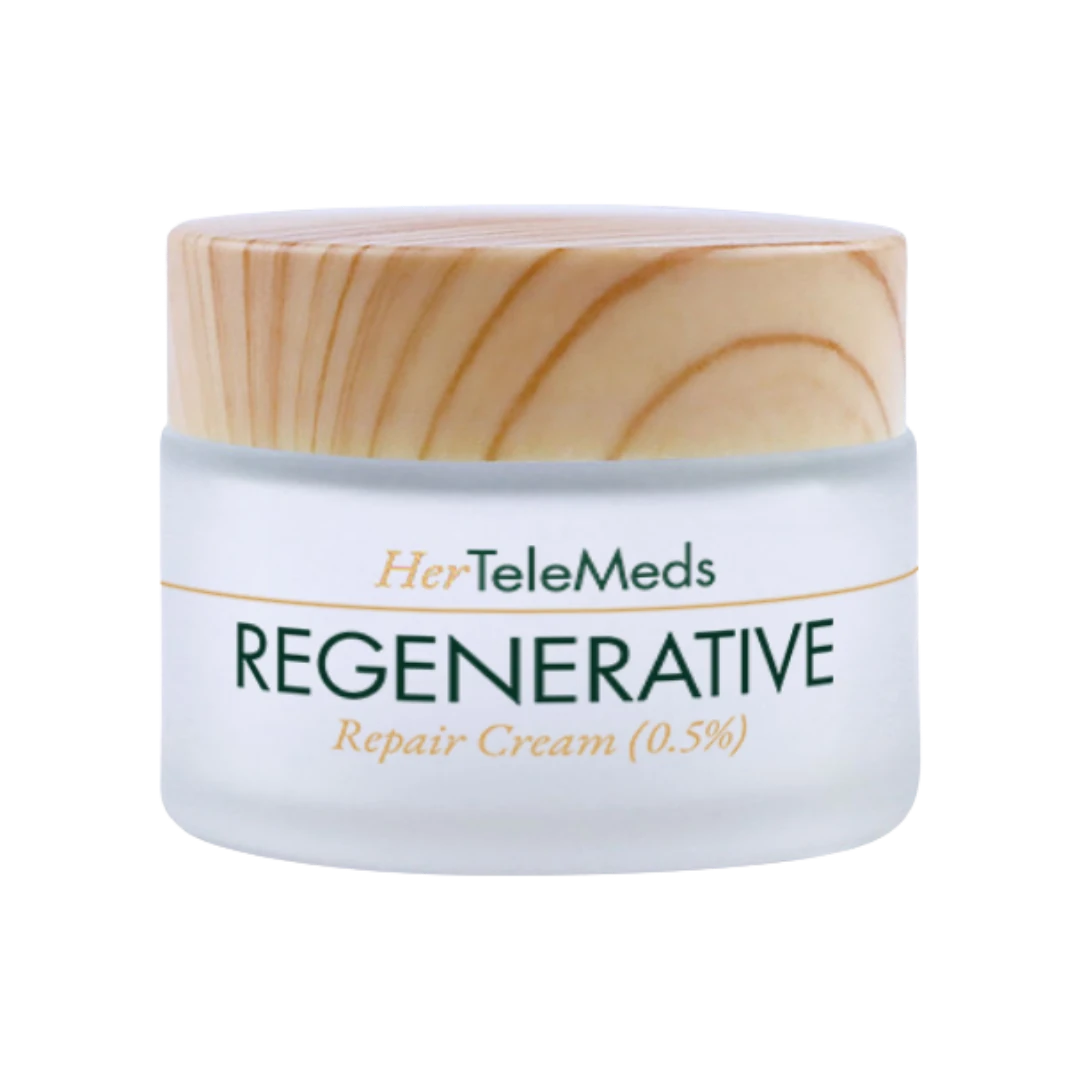
What is GHK-Cu and why does it matter for aging skin?
+
GHK-Cu is a naturally occurring copper-binding tripeptide that modulates tissue repair, collagen production, and cellular signaling in the skin. Levels drop with age — by around 60% between age 20 and 60. That decline contributes directly to the collagen loss, reduced elasticity, slower healing, and increased inflammation that characterize aging skin. Regenerative Repair Cream replenishes GHK-Cu topically, supporting the biological processes that younger skin performs naturally.
How is this different from OTC copper peptide serums?
+
OTC copper peptide products vary enormously in concentration, stability, and formulation quality. Most commercial serums list copper tripeptide-1 as a minor ingredient at concentrations too low for meaningful clinical effect. Regenerative Repair Cream is compounded at a verified 0.5% therapeutic concentration by a specialized pharmacy with over 35 years of compounding experience — and prescribed by a clinician who reviews your full health context before your first fill. Purity, concentration, and formulation stability are all confirmed before anything ships.
Is this the same as copper peptide injections?
+
Topical and injectable GHK-Cu are different routes of administration with different clinical profiles. Injectable GHK-Cu produces systemic and targeted effects that topical application cannot fully replicate — but topical GHK-Cu has its own well-established clinical evidence for skin-specific outcomes: reduced wrinkle depth, improved elasticity, increased collagen density. Topical is the appropriate route for most patients pursuing skin regeneration, and the clinical data behind it is robust. Not all peptide protocols require injection, and this formulation delivers meaningful results through the topical route as prescribed.
Why start at 0.5% rather than a higher concentration?
+
0.5% is a clinically effective entry point. In a Phase II clinical trial, 72% of male participants saw greater than 20% hair density increase using a 0.5% GHK-Cu lotion — demonstrating that meaningful results occur at this concentration. For patients who are new to GHK-Cu or want to start at a more accessible price point, 0.5% is where the protocol begins. There is no clinical contraindication to starting at a higher concentration — the difference is patient preference, tolerance, and goals. Many patients try 0.5%, respond well, and step up over time.
Can I use this alongside other HerTeleMeds skincare prescriptions?
+
Generally yes, but sequencing matters. Avoid combining GHK-Cu in the same application session with vitamin C, retinol, or alpha hydroxy acids — these can interact with copper peptides and reduce their effectiveness or cause irritation. If you are using Luminant All-In-One Face Cream, apply GHK-Cu in the morning and the tretinoin-containing product at night. Your HerTeleMeds clinician will advise on the right routine for your specific combination.
How long before I see results?
+
First results in skin hydration and texture typically appear within the first 2 weeks. Fine lines and wrinkles begin to noticeably fade after 1–2 months as texture and elasticity improve. After 3–6 months, elasticity and firmness continue improving, and scars or hyperpigmentation may begin to fade. Results at 0.5% are real — they build more gradually than at higher concentrations, but the mechanism is the same.
Is GHK-Cu safe for long-term use?
+
To date, no existing research has discovered any serious safety concerns with the use of topical GHK-Cu copper peptides. GHK-Cu supports foundational biological processes rather than masking symptoms. Many patients use it as an ongoing daily protocol, treating it as a maintenance and regeneration practice rather than a finite treatment course. Your HerTeleMeds clinician will review your response at each refill.
Can I use this on my neck and hands as well?
+
Yes. GHK-Cu works on any skin experiencing age-related changes — the neck, décolletage, and backs of hands all benefit from the same collagen-stimulating, barrier-supporting mechanisms. Apply a thin layer to any area you’re targeting.